From Side Project to Revenue: A Roadmap for an Astrology App Startup
Start with one clear astrology problem, build the smallest useful product, learn from real users, then add revenue and growth deliberately.
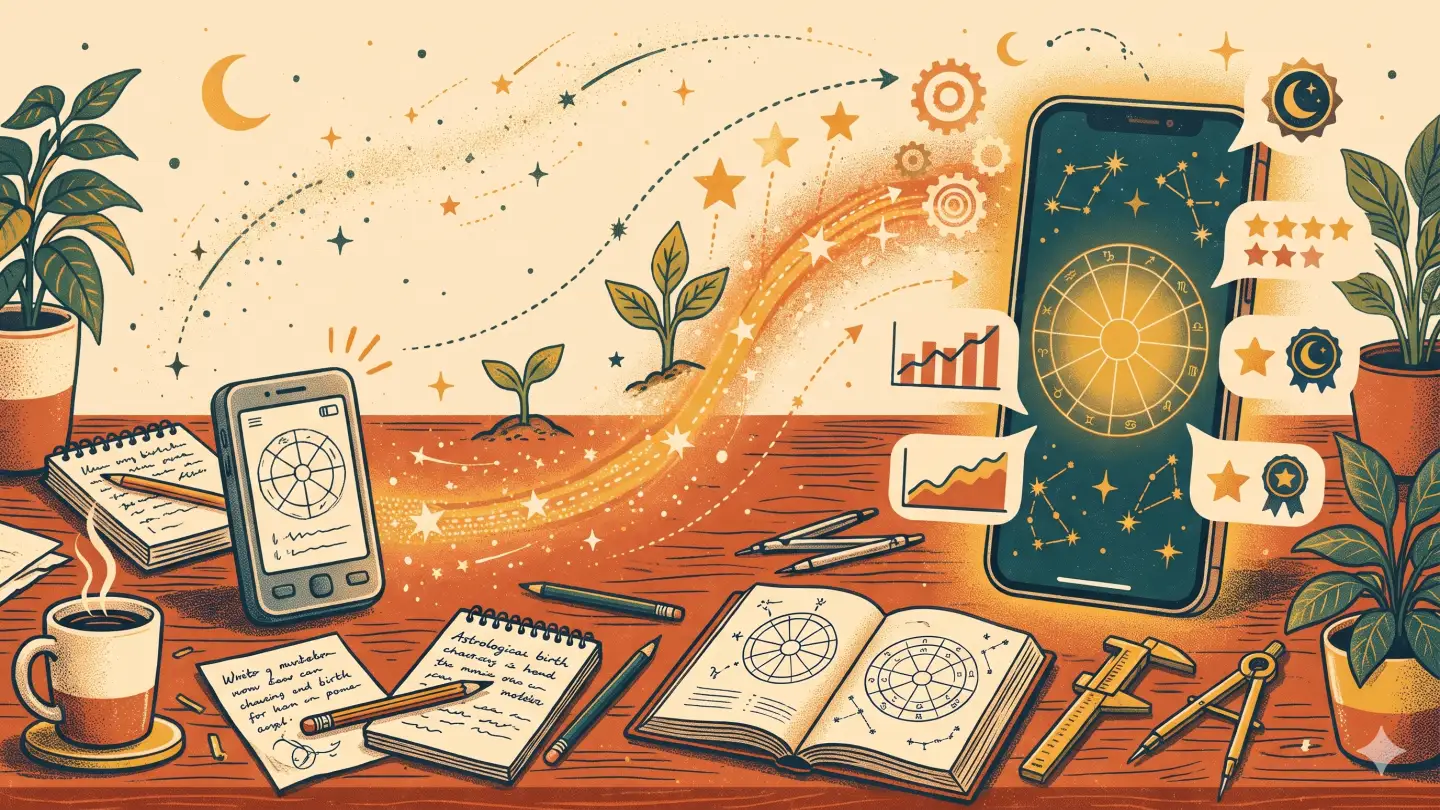
- A sustainable astrology product begins with one specific user problem rather than every possible feature.
- A small MVP with reliable birth details, one or two meaningful results, and a mobile-friendly experience is enough to learn from the first users.
- Add monetization only after users see value, then grow with habitual content, languages, measured retention, and carefully chosen features.
Many great apps start as a weekend idea. Astrology is a good space for this because people already love it, they check it daily, and they are willing to pay for personal answers.
But going from "a cool side project" to "a real business" needs a plan. Here is a simple roadmap in five stages.
Stage 1: Pick One Clear Idea
Don't try to build everything. A full astrology app with kundli, matching, panchang, chat and shopping is too much for a start.
Pick one problem and solve it well. For example:
A daily horoscope app in Hindi
A kundli matching tool for marriage
A birth chart report generator
A panchang app for daily rituals
Ask yourself: Who is my user, and what do they come to my app for? If you can answer that in one sentence, you are ready.
How AstrologyAPI helps: AstrologyAPI offers many ready-made astrology features in one place, such as horoscopes, kundli, matching and panchang. You can test your idea with one feature first, without building anything from scratch.
Stage 2: Build a Simple MVP
MVP means "minimum viable product". It is the smallest version of your app that still works and gives value.
A good MVP has:
A simple form to enter birth date, time and place (the Geo Location API can auto-suggest places and handle timezones)
One or two useful results (for example, a birth chart and a short summary)
Clean, easy-to-read text instead of heavy technical terms
A fast, mobile-friendly design
Keep the first version small. Launch in weeks, not months.
How AstrologyAPI helps: You don't need to write astrology calculations yourself. Send birth details to the Astrology API and get planetary positions, charts, dashas and compatibility results back. This saves months of work and lets you focus on the user experience. Want a ready-to-share report? The PDF API generates it for you.
Stage 3: Get Your First 100 Users
Now you need real people using it. Start in places where interested users already are:
Instagram, YouTube Shorts and Facebook groups about astrology
WhatsApp groups and local communities
A simple blog with posts like "What does your moon sign say about you?"
Friends and family, who can give honest feedback
Talk to your first users. Ask what they like, what confuses them, and what they wish the app had. These early answers are more valuable than any marketing plan.
How AstrologyAPI helps: Since the calculations are handled for you, you can ship quickly, change features based on feedback, and use the data to create shareable content like daily sign predictions from the Horoscope API for social media. If you want a quick, no-code-style landing experience, AstroPages can help you get a page live fast.
Stage 4: Earn Your First Rupee
Once people use and like your app, add a way to earn. Common options are:
Paid reports: keep the basic result free, charge for a detailed kundli or yearly report.
Subscriptions: monthly access to premium horoscopes, alerts and extra features.
Consultations: connect users with astrologers and take a commission.
Ads or affiliates: show relevant ads, or recommend gemstones and pooja services.
Start with one model only. Paid reports are often the easiest, because the user sees clear value and pays once.
Keep the price simple, and let users try something free first. Trust matters a lot in astrology, so be honest and clear about what people get.
How AstrologyAPI helps: Detailed reports, dosha checks and dasha timelines from AstrologyAPI can become your paid products, and the PDF API turns them into polished, downloadable reports. You build the experience and pricing, and the API supplies the astrological data behind them. You can even add Audio Reports as a premium extra.
Stage 5: Grow and Scale
When you have paying users, focus on keeping them and growing step by step.
Build a daily habit. Daily horoscopes, panchang and push notifications bring users back. Returning users are your real growth engine.
Add languages. Hindi, Marathi, Tamil, Bengali and others can open large new audiences.
Add features slowly. Match-making, dosha checks, AI chat and dasha timelines can come after your first idea works well. Newer ideas like palmistry, face reading, Vastu, astrocartography and Human Design can also set your app apart.
Track your numbers. Watch how many users return, how many pay, and how much it costs you to get each user.
Think beyond one app. Later, you can offer your service to other businesses, such as matrimony sites, wellness brands or e-commerce stores.
How AstrologyAPI helps: As you grow, you can add new features without rebuilding your base. You can also explore the AstrologyAPI MCP Server to connect astrology data with AI assistants and build features like a personalized astrology chatbot with the Astro-Chat API.
Common Mistakes to Avoid
Building too many features before anyone uses the app
Ignoring user feedback
Giving inaccurate results because of wrong birth time or timezone handling (the Geo Location API helps you get place and timezone right)
Charging too early, before the app gives clear value
Making false promises about the future. Be careful and honest.
Final Thoughts
You don't need a big team or a big budget to start an astrology business. You need a clear idea, a simple first version, real users, and patience. Use an API to handle the hard calculations, spend your time on the experience, and grow one stage at a time.
Ready to start? Visit AstrologyAPI to explore the features, or check the MCP Server page to see how AI can power your next idea.